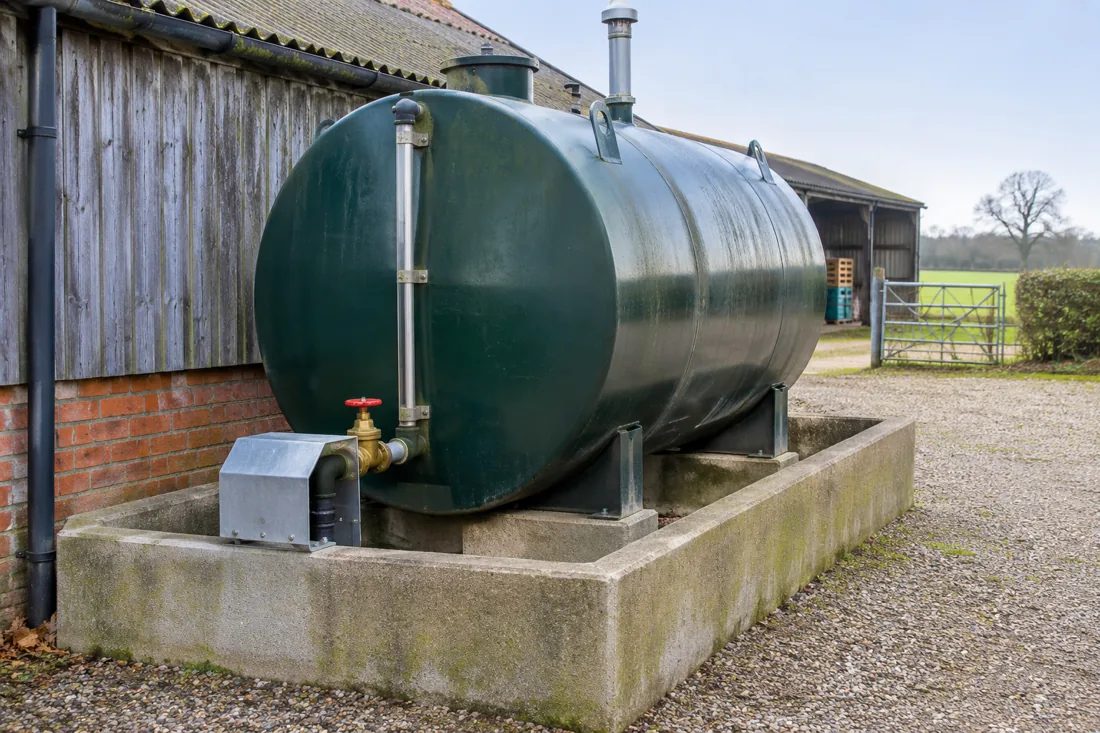
Treat A Suspected Leak As A Separate Problem
A strong oil smell, wet staining, visible drips or an unexplained fall in the gauge can indicate a leak. These signs do not identify the source by themselves. The vessel, fittings and supply pipework all need consideration, and a delivery or appliance problem can produce confusing symptoms.
This page helps Suffolk households and businesses explain a suspected leaking oil tank and understand the work that may follow. The website enquiry form is not an emergency response channel. An enquiry does not confirm attendance, availability or a response time.
Pollution And Immediate Priorities
Keep people and pets away from spilled oil and avoid flames or ignition sources. Do not wash the oil into a drain, attempt to patch a damaged vessel or open it to investigate. Arrange qualified help and follow professional instructions for your particular installation.
If oil has reached land, a drain or water, use the Environment Agency reporting route on GOV.UK. Contact your insurer promptly and explain what you have seen. If there is immediate danger to people, seek emergency help rather than waiting for a website reply.
Postpone a planned delivery until the supplier has been told about the suspected problem and the tank's suitability has been assessed. More oil can increase the amount at risk. Do not deliberately empty a leaking system through normal use as a substitute for controlled recovery.
Confirm The Source And Recover Fuel
A specialist first assesses the condition, escape route and remaining contents. Where it can be done safely, recovering fuel from a damaged tank can limit further loss. The receiving vessel and handling equipment must be suitable, with access and secondary containment considered in the plan.
The investigation should include accessible fittings and pipework rather than assuming every leak is a split tank. A local connection fault and a failed tank body may require different repairs. A temporary intervention is not automatically an acceptable long-term solution or evidence that all contamination has been removed.
Tank Failure Or A Pipework Defect?
A cracked plastic tank generally needs replacement rather than an improvised patch. A steel vessel or connection may offer other repair options, but only after condition and suitability have been assessed. Ask what caused the failure and whether the base or location contributed.
If replacement is needed, use the opportunity to review support, containment and the proposed position. The replacement guide sets out those decisions. Continuing with an unsuitable old base can leave the next tank exposed to the same support problem.
Contamination Is Its Own Workstream
Stopping the leak and removing the tank do not necessarily deal with oil already in the ground. Depending on the circumstances, assessment may involve soil sampling, investigating drainage routes and defining a remediation scope. Surface staining alone cannot show the full extent of a spill.
Photograph the area from a safe position and note when the problem began. Keep delivery and condition records to help an insurer or specialist understand the incident.
Keeping Heat Or Plant Available
Domestic heating may need to stop while the system is made safe and repaired. Ask whether a temporary tank is feasible, what preparation it needs and who arranges the fuel. It adds work and cost, and should never be presumed available before the site and supply arrangements have been checked.
Identify equipment supplied and the consequence of interruption. Occupied or working premises may need a separate continuity plan, subject to the safety assessment.
What Changes The Cost?
The remaining oil, the source of the leak, tank condition and route for recovery equipment all affect the initial work. Replacement, base repairs and temporary storage are additional items. Contaminated soil, drains or buildings can require separate investigation and specialist remediation beyond the tank work.
Ask for the scope to separate containment and recovery, permanent repair or replacement, and contamination work. Where quantities are uncertain, request the assumptions and approval process for further costs. Discuss insurer requirements before committing to non-urgent reinstatement that might obscure useful evidence.
Information And Records To Keep
For a first enquiry, state that a leak is suspected, give the postcode and describe visible damage, smell or staining. Add approximate fuel level, recent delivery details, nearby drains or water and the vehicle access route. Never approach unstable equipment or lift covers to get a photograph.
Retain work descriptions, inspection findings, fuel recovery records and relevant waste transfer or consignment documentation. If affected soil is removed, ask for quantity and destination records. Where environmental assessment or remediation takes place, keep those reports separately from a tank installation certificate.
Ask what each report establishes and what remains unresolved. Enquire about follow-on work after addressing immediate danger and reporting.
Your Questions
Does This Form Provide An Emergency Call-Out?
The leaking oil tank enquiry form does not provide a confirmed emergency call-out or guaranteed response time. Deal with immediate danger and environmental reporting through the appropriate official channels. You can then use the form to describe recovery, replacement or investigation needs and request contact about the next stages.
Does A Replacement Resolve Ground Contamination?
Replacing a leaking oil tank does not by itself resolve ground contamination. Escaped oil may require investigation of soil, drains or nearby structures, with remediation scoped separately. Keep the tank work records and environmental reports together, and ask each contractor to explain the limits of what their work establishes.