Make The Space Useful Again
An oil tank can outlast the heating system it supplied. If you are changing heating, clearing a garden or preparing a property for sale, removal starts with finding out what is still connected and what remains inside. An apparently empty tank can contain sludge, water and fuel residue.
Our Suffolk oil tank removal enquiries cover domestic heating tanks and commercial storage. Tell us whether the tank alone needs removing or the whole area needs clearing.
Removal, Replacement Or Decommissioning?
Choose removal when the tank is no longer needed and the footprint needs clearing. If oil heating will continue, a coordinated replacement can combine fuel handling, removal and reconnection in one programme. This avoids arranging separate visits without an agreed handover.
A buried tank needs a separate decision between excavation and decommissioning in place. Neither should be selected from a photograph of the lid alone. The underground tanks guide explains the survey, excavation and future land-use questions that influence that choice.
Before Anything Is Moved
The contractor identifies the tank, its contents, connected pipework and the equipment it supplies. Isolation must be coordinated with the heating or plant system. Remaining liquid is recovered into suitable equipment, with usable fuel kept separate from contaminated residues where recovery is practical.
Cleaning follows before a lift or any cutting is considered. The method depends on tank construction, previous contents and the work environment. Atmospheric assessment and any gas-free precautions belong in the contractor's method, with hot work treated separately rather than assumed safe because the tank has been drained.
For a business, ask for site-specific risk assessments and method statements before work begins. Where lifting equipment is involved, the lift and exclusion area need planning. Occupied schools, shared yards and tenant properties also need an agreed contact who can control access while work takes place.
A Narrow Gate Changes The Method
A tank that arrived before an extension or new fence may no longer fit through the same route. Provide the narrowest gate width, steps, turns and overhead restrictions. Mention soft lawns, fragile paving, septic tank covers and anywhere a vehicle cannot safely stand.
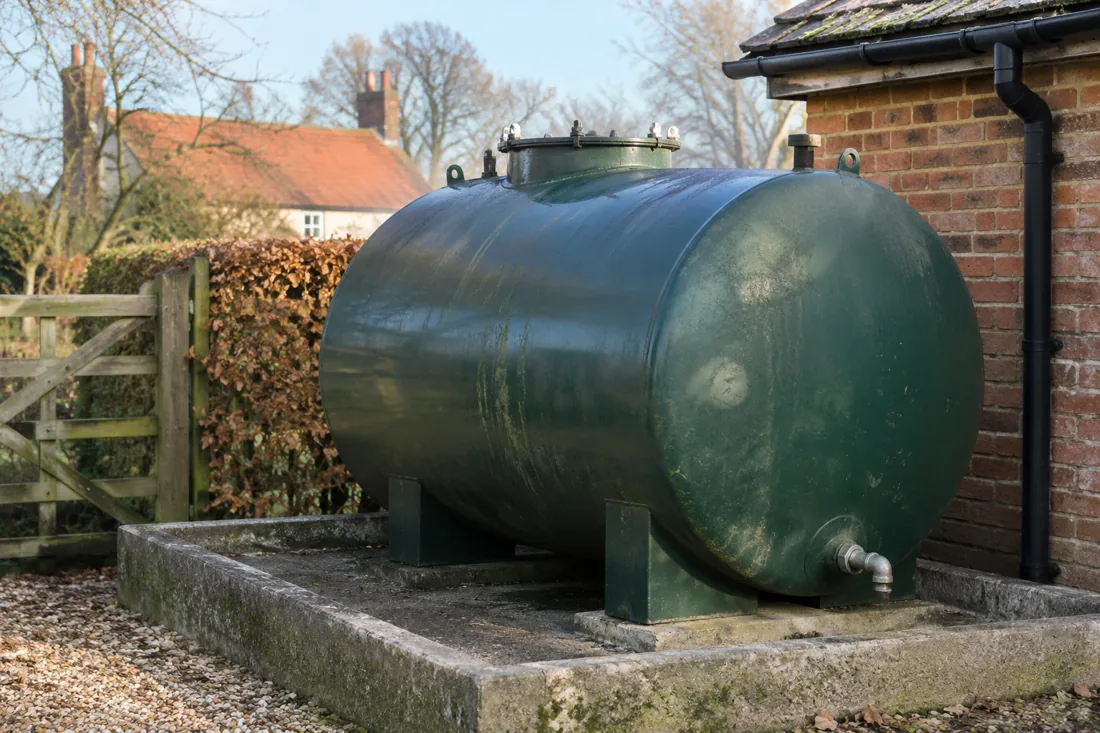
An above-ground tank may be removed whole or sectioned by a specialist after preparation. Do not dismantle walls or fences before the route has been agreed. Ask whether taking the tank away includes its supporting frame, disconnected pipework, redundant fill point and any separate enclosure.
What Happens To Remaining Oil?
Give an approximate fuel level even if the gauge is unreliable. Usable oil might be transferred to a suitable tank on the same property by agreement, but reuse depends on condition and a safe receiving arrangement. A provider should not promise that every litre can be saved.
When oil is no longer wanted, include its removal in the scope. Sludge, water and contaminated fuel require a suitable waste route. Do not run a failing tank dry to make collection simpler, and do not offer unknown fuel to a neighbour before its condition and handling arrangements have been assessed.
Compare The Whole Removal Cost
The main cost drivers are tank size and material, remaining liquid, cleaning needs, access and the lifting or sectioning method. Buried tanks introduce excavation, spoil handling and reinstatement. Suspected ground contamination is a separate uncertainty that needs assessment.
Ask a quote to state exactly what will remain. Removing a vessel does not automatically mean breaking out a concrete base or returning a garden to finished level. Agree whether making good, soil sampling, fencing changes and any follow-on building work are included, excluded or provisional.
Records Worth Keeping
Request a written description of the tank removed, the work completed and the destination or route for removed materials. Relevant waste transfer or hazardous waste consignment documentation depends on classification and circumstances. A disposal record is useful, but does not by itself demonstrate that underlying soil is uncontaminated.
Keep the scope, invoice and any applicable testing or decommissioning records with the property file. Commercial buyers should also retain the contractor's agreed method and waste records. A gas-free certificate relates to specific testing and work conditions, rather than giving an indefinite assurance about a vessel.
Send A Clear First Enquiry
Include your Suffolk postcode, tank material and approximate dimensions, whether it is still in use and the estimated fuel level. Send a wide view, the base, visible connections and the entire route to the collection vehicle when a provider requests photos. Do not open the tank to obtain a better picture.
Tell us about any smell, staining or unexplained fuel loss at the start. A suspected leak needs the leaking tank route rather than waiting for a routine clearance quote.
Your Questions
Does Oil Tank Removal Include The Base?
Oil tank removal does not automatically include breaking out the base. Ask for the quote to distinguish the vessel, supports, pipework and concrete or paving. If the ground needs reinstating for a patio, planting or building work, agree that finished condition separately before work is booked.
Can Remaining Oil Be Reused?
Remaining oil can sometimes be reused after its condition has been checked and a suitable receiving tank agreed. Water, sludge or mixed fuel can make recovery unsuitable. Tell the provider how much oil you believe is left, but expect the final handling decision to follow an assessment.