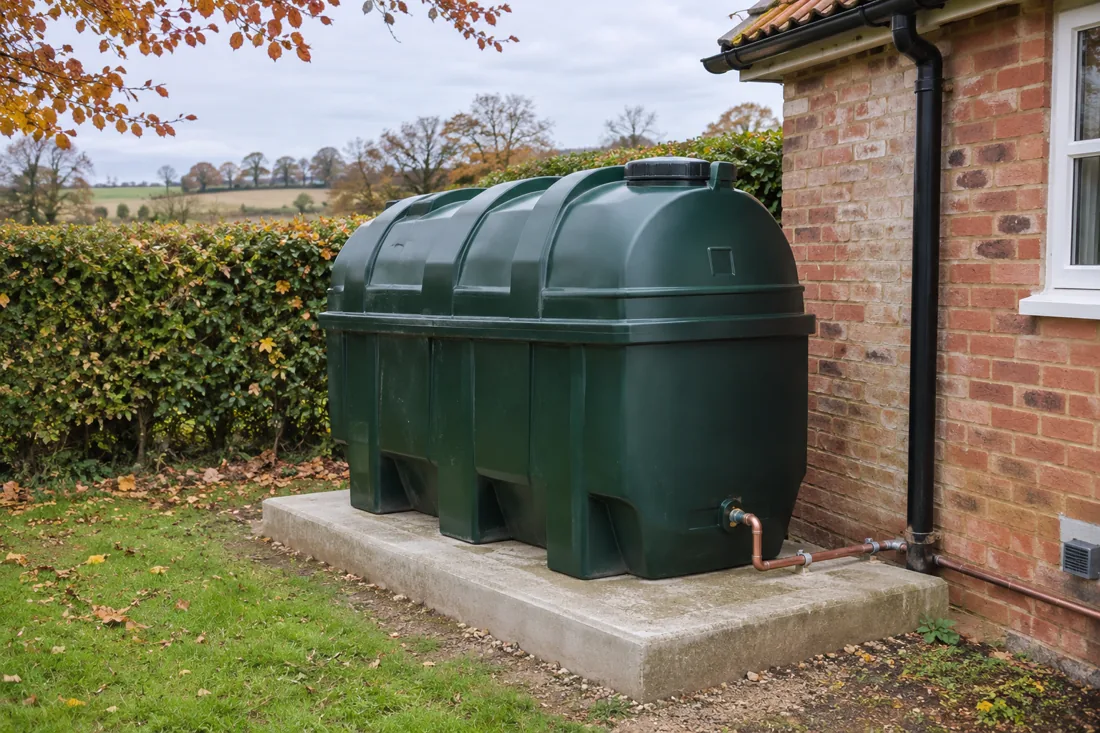
Replace The Problem, Not Just The Tank
A replacement is an opportunity to check the whole installation. The old tank's footprint, base and delivery arrangement might have worked for years without being suitable for the next tank. A fresh vessel on tired supports can leave the underlying problem unresolved.
We help Suffolk households and businesses start with the right questions: why is replacement needed, can the location remain, and what must happen to the oil already stored? Visible cracking, distortion, rust or a moving base should be described before a routine installation date is discussed.
Decide What Needs To Change
A like-for-like capacity can make sense when consumption and delivery patterns are unchanged. Revisit size if demand has changed. Extra storage also changes weight and space requirements.
Horizontal, vertical and slimline shapes solve different space problems. Compare the outside dimensions of a complete bunded unit, including fittings and maintenance access, rather than only its stated capacity. A narrow tank is not automatically suitable beside a building or boundary.
Plastic avoids steel corrosion but still needs proper support and checks for ageing or damage. Steel can suit particular capacities or installation requirements. Material, containment and fire protection should be selected together after assessing the location, rather than treated as interchangeable catalogue choices.
The Old Base Deserves Attention
Look for cracked slabs, settlement, unsupported edges and a tank leaning on uneven ground. The replacement model may need a different support arrangement even when its capacity is similar. Manufacturer instructions and the proposed installation design should determine whether an existing base can remain.
On a rural property, the route to a base can be as important as the base itself. A narrow side passage, steep garden or soft verge can change how the new tank is delivered. Photograph the approach from the road through to the tank, including any turns that limit handling equipment.
Plan Fuel And Heating Together
The contractor assesses the remaining oil before deciding what can be transferred. Water and sludge should be separated from reusable fuel. Contaminated oil may need removal, so a quotation should explain the handling allowance and how a larger-than-expected waste volume will be addressed.
Heating is interrupted during isolation and connection. Where a base rebuild or supply delay creates a longer gap, ask whether a suitable temporary storage arrangement is feasible and what it costs. Do not assume temporary heating, fuel delivery or a guaranteed same-day changeover is included.
From Assessment To Handover
First, agree the new tank, location, base work, oil handling and old tank removal in writing. Any required groundwork can then be sequenced around curing or preparation needs. A realistic programme also accounts for access permissions, occupants and the heating system that must be available for testing.
During the changeover, the old system is safely isolated and fuel recovered before the old tank is removed. The new tank is positioned and connected, with the necessary checks before the system returns to service. The handover should explain the gauge, delivery point, routine visual checks and any maintenance instructions.
Building Rules And Containment
New and replacement domestic oil storage in England must meet Building Regulations. GOV.UK explains the competent person and Building Control routes. Ask which route will be used before booking and which compliance records you should expect.
Bunding and fire separation require an assessment of the actual position. Nearby drains, ditches, buildings, boundaries and water sources all matter. Commercial storage has a different regulatory framework, so a household installation assumption should not be applied to a farm business or workplace without checking the use and rules.
Understand What A Quote Includes
Compare the tank specification, base preparation, fuel transfer, pipework, old tank removal and testing. A low supply-only figure is not directly comparable with a completed changeover. Ask whether access equipment, temporary storage, waste removal and making good are included or separately priced.
Ask how hidden pipe damage or contamination would be investigated and any additional work agreed. Report a suspected leak before ordering more fuel, since it can change both urgency and the appropriate work sequence.
Your Enquiry And Your Records
Start with the postcode, current capacity, approximate fuel level and reason for replacing. Useful photographs show the whole tank, its label if safely readable, the base, surrounding buildings and the access route. Mention extensions, fences or landscaping proposed near the new position.
Retain the tank instructions, warranty details, installation and commissioning record, and applicable Building Regulations notification or approval. Keep the waste documentation appropriate to the old tank and residues as well. Contact us to describe the replacement, or use the installation guide when planning an entirely new position.
Your Questions
Can My Existing Tank Base Stay?
An existing tank base can stay only if its condition and support arrangement suit the replacement model. Similar capacity does not mean identical support needs. Photographs can identify obvious concerns, but the installer may need to inspect the ground and base before confirming whether reuse is suitable.
Will Replacement Interrupt My Heating?
Oil tank replacement interrupts heating while the system is isolated and reconnected. The length of the interruption depends on the base, access and connection work. Discuss any need for temporary storage or alternative heat before booking, particularly where occupants depend on the heating throughout the work.