Choose The Position Before The Product
A new oil tank installation begins with a workable location. Capacity and shape come later, once the base, building separation, delivery access and pollution risks are understood. A tank that fits on paper may still leave too little room to inspect it or fill it safely.
Suffolk enquiries include rural homes installing a new heating supply, properties moving storage away from building work, and businesses adding fuel storage. Tell us what the tank will supply and which fuel it will contain. Domestic heating oil, farm fuel and generator storage should not be scoped as the same installation.
Work Out The Storage Requirement
Use previous consumption, expected demand and delivery habits as the starting point for tank capacity. If this is a new heating system, the system designer's information is more useful than guessing from property size. Business users should identify reserve needs.
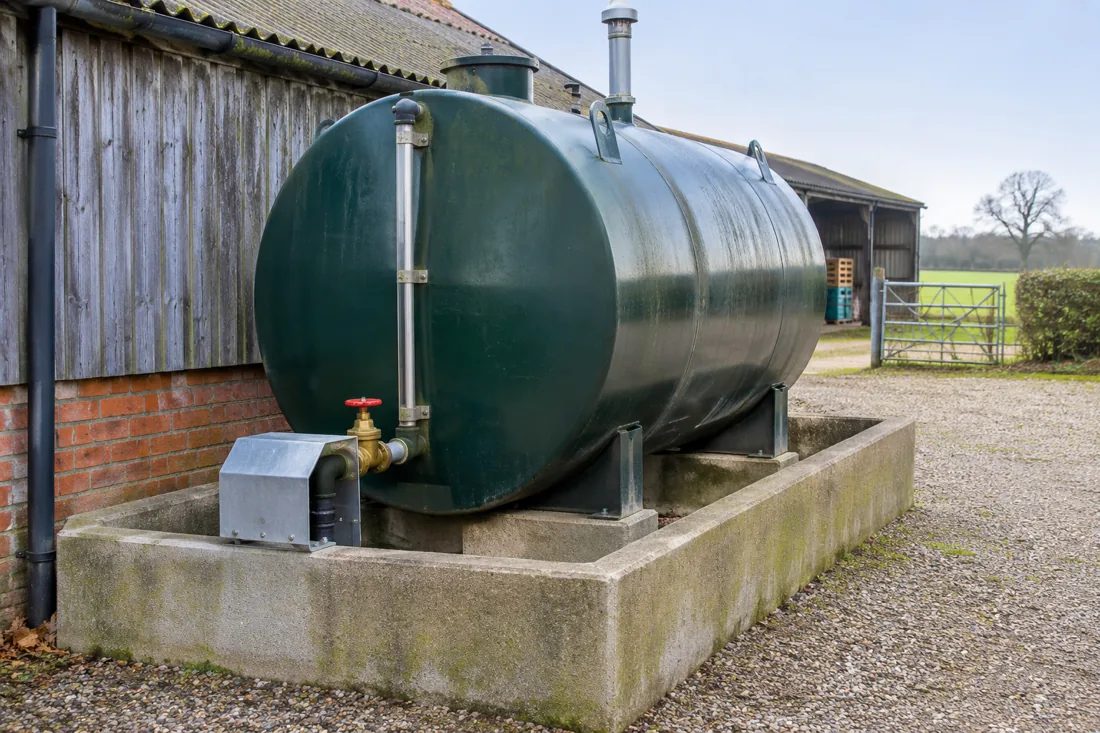
A bunded tank provides secondary containment around the inner vessel. Its overall size can be considerably greater than the storage volume suggests. Leave room for the fill and vent arrangement, inspection, security measures and routine maintenance when comparing possible locations.
Where an existing tank is being relocated, its condition must be assessed before reuse is considered. Moving an aged vessel is not necessarily the best use of the installation budget. Compare relocation with a new replacement that also resolves capacity or containment concerns.
Survey The Ground And Surroundings
The survey should consider ground stability, slope, drainage and the support required by the chosen tank manufacturer. An old garden slab or a patch of hardstanding should not be assumed adequate. Base dimensions and construction follow the tank and installation design, with access for later checks.
Photograph nearby doors, windows, eaves, boundaries, drains and watercourses. Mention a well or borehole even if it is outside the photograph. The installer assesses fire and pollution risks together, rather than relying on a single universal distance taken from an online diagram.
Check any consent needed for associated groundworks or screening. An enclosure must allow safe delivery and inspection.
Deliveries Must Work In Practice
Explain where the delivery vehicle can stand and the route from that point to the fill connection. Locked gates, shared drives, parked vehicles and restricted operating hours can all affect a workable arrangement. A remote fill needs its own design checks rather than simply extending a pipe.
For the installation itself, measure the narrowest access and note steps, low branches, tight turns and soft ground. Do not assume a new bunded tank can follow the route used by a smaller single-skin tank. Agree any lifting or temporary access changes before the delivery date.
Connection And Commissioning
Once the location and specification are agreed, the base and supply route can be prepared. Existing oil pipework should only be reused after its suitability and condition have been assessed. The tank installation and the appliance connection need a clear division of responsibilities if different contractors are involved.
The completed system needs checks before it is handed over for use. Ask who arranges the first fuel delivery and whether the quantity or timing is restricted during commissioning. The handover should explain filling, isolation controls, gauges and how to recognise a condition that needs professional attention.
Regulations And Commercial Differences
GOV.UK's domestic guidance explains that new home oil tanks must comply with Building Regulations. A registered competent person can self-certify suitable work within their scheme. If that route is not used, agree the Building Control process rather than treating paperwork as an optional extra.
For a workplace or farm business, check the applicable business oil storage guidance. Containment, impact protection, fill arrangements and pipework can require different provisions. Farm use has specific distinctions that should be checked against the actual stored product and purpose.
Cost And Programme Decisions
The tank itself is only part of the price. Ground preparation, base construction, pipe length, protective measures, access equipment and commissioning influence the total. Difficult ground or a long route to the appliance can outweigh the apparent saving from choosing a cheaper tank model.
Agree supply, connection responsibilities, exclusions and interruptions in writing. Include any dependency on other trades or groundworks in the programme.
Send The Details That Help
Include your postcode, intended fuel, appliance or equipment supplied, expected demand and any proposed tank capacity. Wide photographs of the intended location and vehicle approach are useful, with approximate access dimensions. Send drawings if an extension or redevelopment will change the surroundings.
At completion, keep the manufacturer's instructions, warranty, installation record and applicable compliance notification or approval. Commercial users should also retain design and commissioning information relevant to their system. Our contact form helps put those requirements into the first enquiry.
Your Questions
How Do I Choose A New Tank Size?
A new oil tank size should reflect fuel demand, delivery arrangements and the usable space at a suitable location. Previous consumption or heating design information helps more than a guess based on house size. The installer also needs the complete outer dimensions and access requirements of the proposed model.
What Installation Documents Should I Ask For?
Oil tank installation documents should include the product instructions, warranty information and a record of the installation and commissioning. Ask how Building Regulations compliance will be handled and what notification or approval applies. Business users should also request the design and operating records relevant to their storage arrangement.