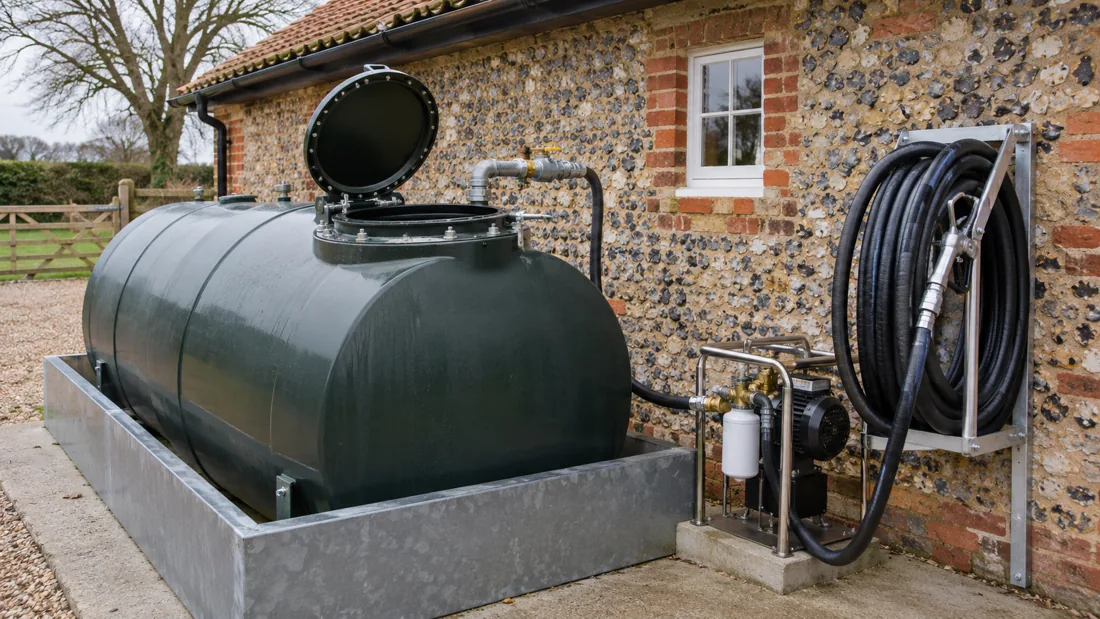
Find Out What Is In The Tank
Water, sediment and sludge can compromise stored fuel and interrupt heating or equipment operation. Cleaning removes unwanted material from the vessel, but the first decision is whether the symptoms actually point to contamination. Boiler faults have other causes too.
Our Suffolk cleaning enquiries cover domestic heating oil tanks and commercial fuel storage. Explain whether you need investigation of a current problem, preparation for a product change, or cleaning before removal. These are different jobs, even when the tank looks the same from outside.
Cleaning, Fuel Treatment Or Replacement?
Tank cleaning deals with deposits and contamination within the vessel. Filtering fuel alone may leave sludge attached to the bottom or walls. Equally, a small amount of free water does not automatically justify the most extensive cleaning method, so sampling and inspection help define a proportionate scope.
A structurally damaged tank is a different problem. Cracks, significant distortion or severe corrosion require an assessment of replacement rather than a clean presented as a repair. Read the replacement guide if the tank itself is deteriorating, and flag any suspected leak at the start.
For a product change, identify both fuels. Cleaning alone cannot establish compatibility.
A Clean With An Agreed Sequence
The contractor assesses the tank, the oil and access, then isolates the relevant system before recovering the contents. Usable fuel can be held separately while contaminated material is removed. The remaining liquid level and the amount of sludge affect the equipment, temporary storage and waste allowance.
The selected cleaning method may use suction and tools or washing suited to the vessel. It must account for plastic or steel construction, openings and the tank's condition.
After cleaning, the tank can be examined for visible damage and possible routes for water entry. Suitable recovered fuel may be filtered and returned by agreement. The connected system is checked as appropriate before reuse, with any appliance servicing or fuel-line work clearly included or excluded.
Access Without Unnecessary Entry
Send photographs of the tank top and accessible openings without removing covers yourself. The reach from equipment to the tank, available standing space and the route across a garden or yard help determine the method. Include steps, locked enclosures, low ceilings or a basement location.
Where internal entry would be required, confined-space precautions are a specialist matter. HSE's confined-space guidance is relevant to planning this work. Entry should be avoided where a suitable non-entry method is reasonably practicable, with a safe system and emergency arrangements where entry is necessary.
Heating And Remaining Fuel
A domestic heating system cannot simply continue drawing oil while its supply tank is emptied. Agree the interruption and make someone available to provide appliance access. If continuous heat or commercial plant operation is necessary, describe that requirement before the cleaning method is priced.
The condition of the oil determines what can be retained. Water, microbial contamination and mixed product can limit recovery, so no percentage should be promised before assessment. Ask whether fresh fuel ordering is your responsibility and how much usable fuel will be needed before the system can return to service.
What A Cleaning Quote Should Cover
Capacity, residue volume, access and the cleaning method are key cost drivers. A difficult hatch or a distant vehicle position may change labour and equipment requirements. Business isolation requirements also influence timing.
Compare quotes for the same outcome. Ask whether sampling, holding the fuel, disposal, replacement filters, system checks and any return visit are included. Ask how extra waste beyond a provisional allowance is charged.
Keep Useful Cleaning Records
Request a description of the work, findings about the tank's condition and the amount or type of material removed where recorded. Waste should be classified and taken through an appropriate route. The documentation may include waste transfer or hazardous waste consignment records according to the material and circumstances.
For a business, retain risk assessments, permits where used and any testing specified in the scope. A cleaning record is not a structural guarantee or a substitute for an inspection regime. Ask the provider to identify defects or limitations that still need attention after the visit.
Prepare A Focused Enquiry
Send the postcode, tank capacity and material, approximate fuel level and a description of the symptoms or planned change. Include recent filter or appliance findings if available. Photographs of the whole tank, fittings and equipment access are more useful than a close-up of an unreadable gauge.
After the work, follow the manufacturer's inspection and maintenance advice. Address defects that could let water return. Tell us about your tank so the cleaning scope can address the cause as well as the residue.
Your Questions
Does Every Boiler Fault Mean The Tank Needs Cleaning?
A boiler fault does not automatically mean the oil tank needs cleaning. Repeated filter blockage or contamination findings can justify investigation, but appliance and supply faults have other causes. Share any recent service report so the contractor can assess whether sampling, cleaning or a different repair is the appropriate next step.
Can A Damaged Tank Be Fixed By Cleaning?
A damaged oil tank cannot be made structurally sound by cleaning it. Cleaning can expose defects that were hidden by residue, but cracks, deformation or severe corrosion need a separate condition assessment. Replacement may be the appropriate route, so establish the tank condition before paying for an extensive clean.